The 5 Layers of SEO: How Search, AI, and Buyer Intent Intersect
Traditional search engine optimization is no longer enough to maintain digital visibility. Discover how the five layers of modern SEO—from core technical foundations to third-party authority—work together to capture discovery and high-intent conversions.
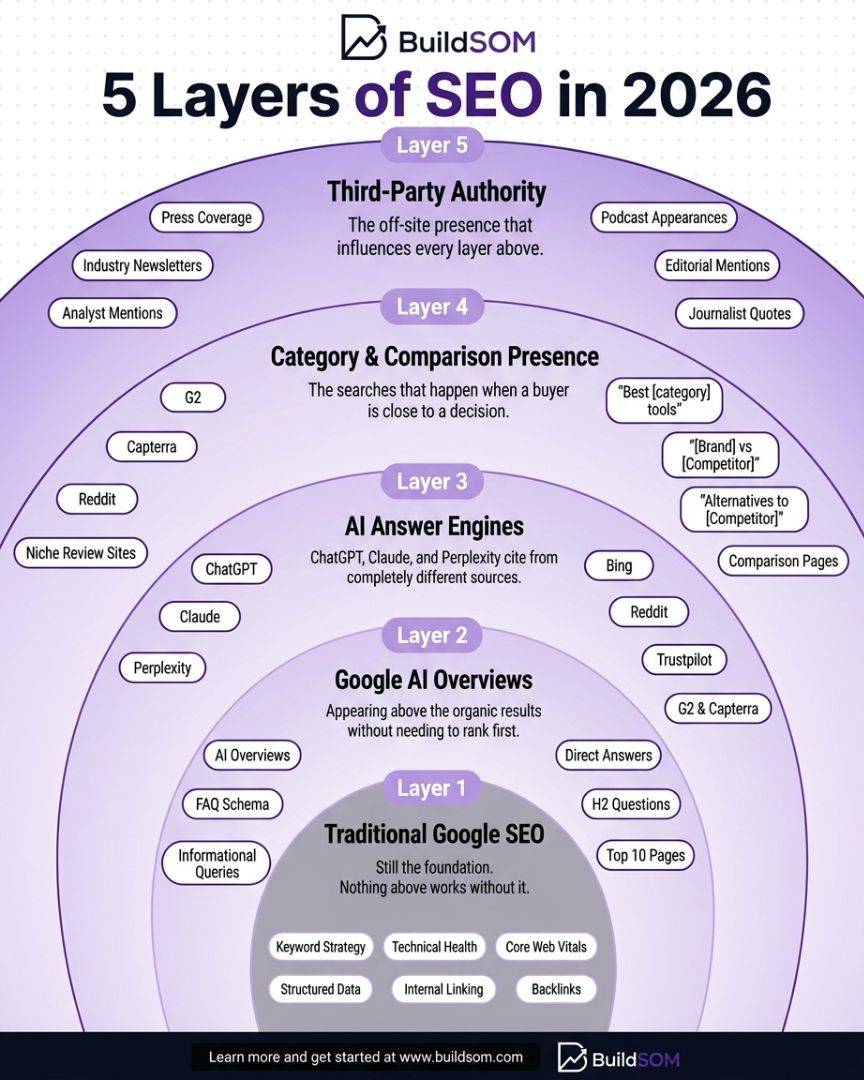
The 5 Layers of SEO: How Search, AI, and Buyer Intent Intersect
Search Engine Optimization has evolved beyond simply targeting high-volume keywords and securing page-one Google rankings. Today, discovery happens across a complex ecosystem that includes generative AI platforms, review aggregators, niche comparison portals, and media publications.
To build a resilient digital presence that captures both broad discovery and high-intent decision-makers, brands must structure their strategy across five interconnected layers.
Layer 1: Traditional Google SEO (The Foundation)
Traditional Google SEO remains the essential core of any search strategy; without a solid foundation here, upper-layer efforts lose their structural support. This layer focuses on building a technical and content framework that search crawlers can easily index, understand, and trust.
Key elements include:
- Keyword Strategy & Content Architecture: Structuring content around primary search intent and mapping informational queries effectively.
- Technical Health & Core Web Vitals: Optimizing page speed, mobile responsiveness, and clean crawl paths to maximize user experience and search engine accessibility.
- Structured Data & Internal Linking: Utilizing schema markup to define page entities clearly while using contextual internal links to pass authority across top-ranking content pages.
- Backlink Profile: Earning authoritative links to build organic trust with search engines.
To evaluate your technical health and strengthen your core search strategy, explore custom enterprise workflows at BuildSOM.
Layer 2: Google AI Overviews
Google AI Overviews sit directly above traditional organic rankings, delivering direct, synthesized answers to users before they scroll down the page. Appearing in AI Overviews allows brands to dominate prime search real estate without necessarily holding the #1 organic spot.
Key strategies for capturing AI Overviews include:
- Direct Answer Formatting: Structuring concise 2–3 sentence answers directly under H2/H3 question headers.
- FAQ Schema: Implementing schema markup to highlight clear Q&A pairs for search algorithms.
- High-Intent Query Coverage: Targeting direct-answer and conversational queries where users seek immediate summaries.
Layer 3: AI Answer Engines (Generative Engine Optimization)
Large Language Models (LLMs) such as ChatGPT, Claude, and Perplexity answer millions of user queries daily. Unlike standard search engines, AI answer engines cite and synthesize information from distinct, diverse sources across the web.
To optimize for generative answer engines:
- Diversify Web Presence: Ensure your brand is cited on forums like Reddit, trusted review platforms, and industry databases, as LLMs draw heavily from community and third-party data.
- Entity Clarity: Maintain consistent branding, clear value propositions, and factual descriptions across all public web mentions.
- Cross-Engine Monitoring: Track how different models cite your brand compared to competitors across ChatGPT, Claude, Perplexity, and Bing.
Layer 4: Category & Comparison Presence
When buyers enter the evaluation stage of the funnel, they move away from informational queries and search for direct software or product comparisons. Owning Layer 4 ensures your brand remains visible when prospects are actively preparing to buy.
Core focus areas include:
- Third-Party Review Hubs: Optimizing listings on review portals such as G2, Capterra, Trustpilot, and niche review sites.
- Community Discussions: Engaging authentically in relevant discussions on platforms like Reddit, where buyers seek real user opinions.
- Comparison Content: Publishing dedicated "Brand vs. Competitor," "Alternatives to [Competitor]," and "Best [Category] Tools" comparison pages on your own website.
Layer 5: Third-Party Authority
The outermost layer represents off-site authority—the external reputation and public relations presence that feeds directly back into all lower layers. Signals from Layer 5 establish trusted context for both human decision-makers and AI citation engines.
Key drivers of third-party authority include:
- Press & Media Coverage: Securing feature stories and brand mentions in respected news outlets.
- Thought Leadership & Podcasts: Appearing as guest speakers on industry podcasts and panel discussions.
- Analyst & Editorial Mentions: Earning inclusions in industry analyst reports, expert quotes, and recognized niche newsletters.
Conclusion: Integrating the 5 Layers
Organic search visibility is no longer a single-track discipline. By treating search engine optimization as a integrated 5-layer framework—building on traditional SEO foundations while systematically optimizing for AI overviews, generative answer engines, comparison platforms, and third-party authority—brands can secure sustainable visibility and market leadership.